
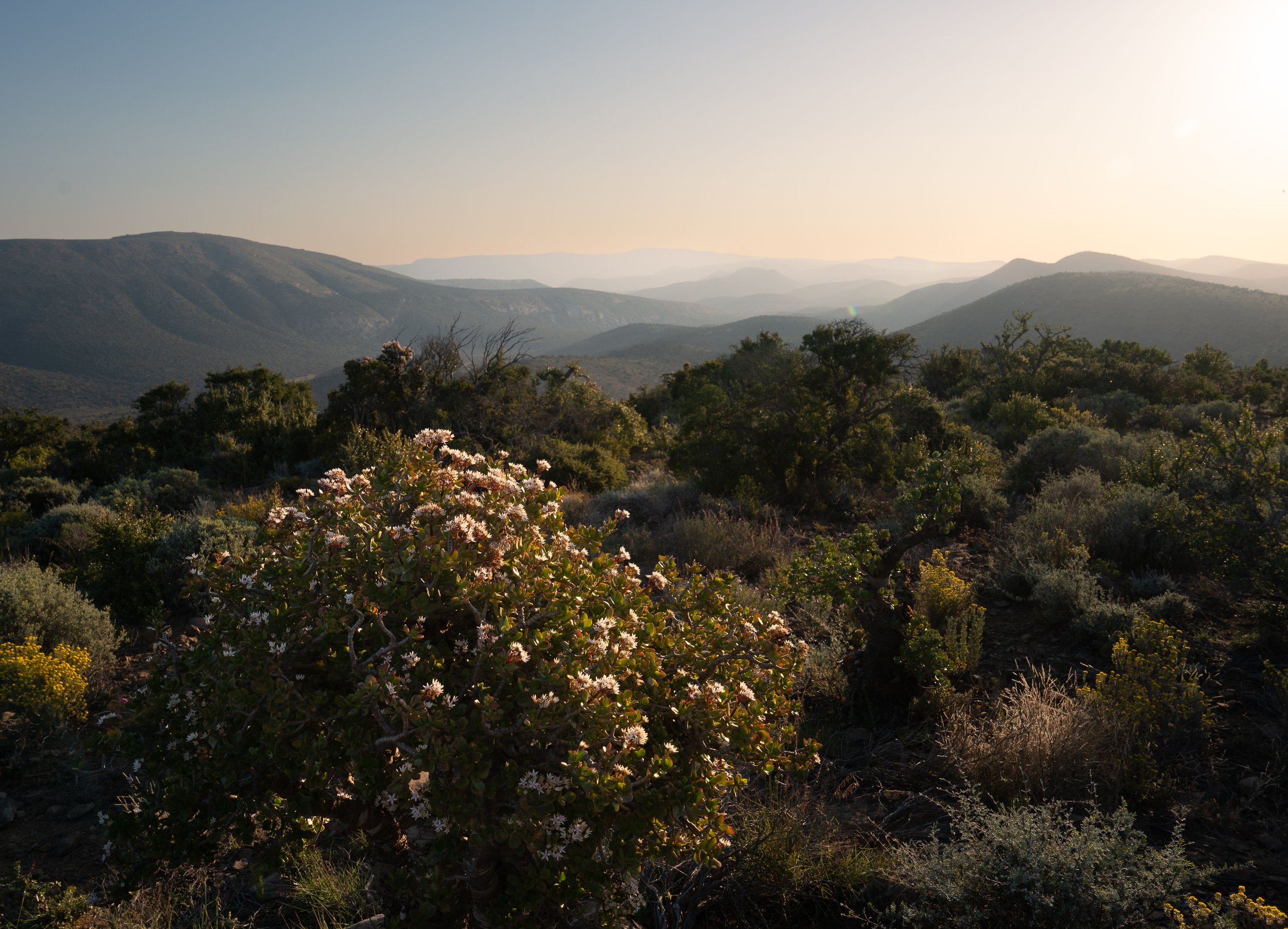
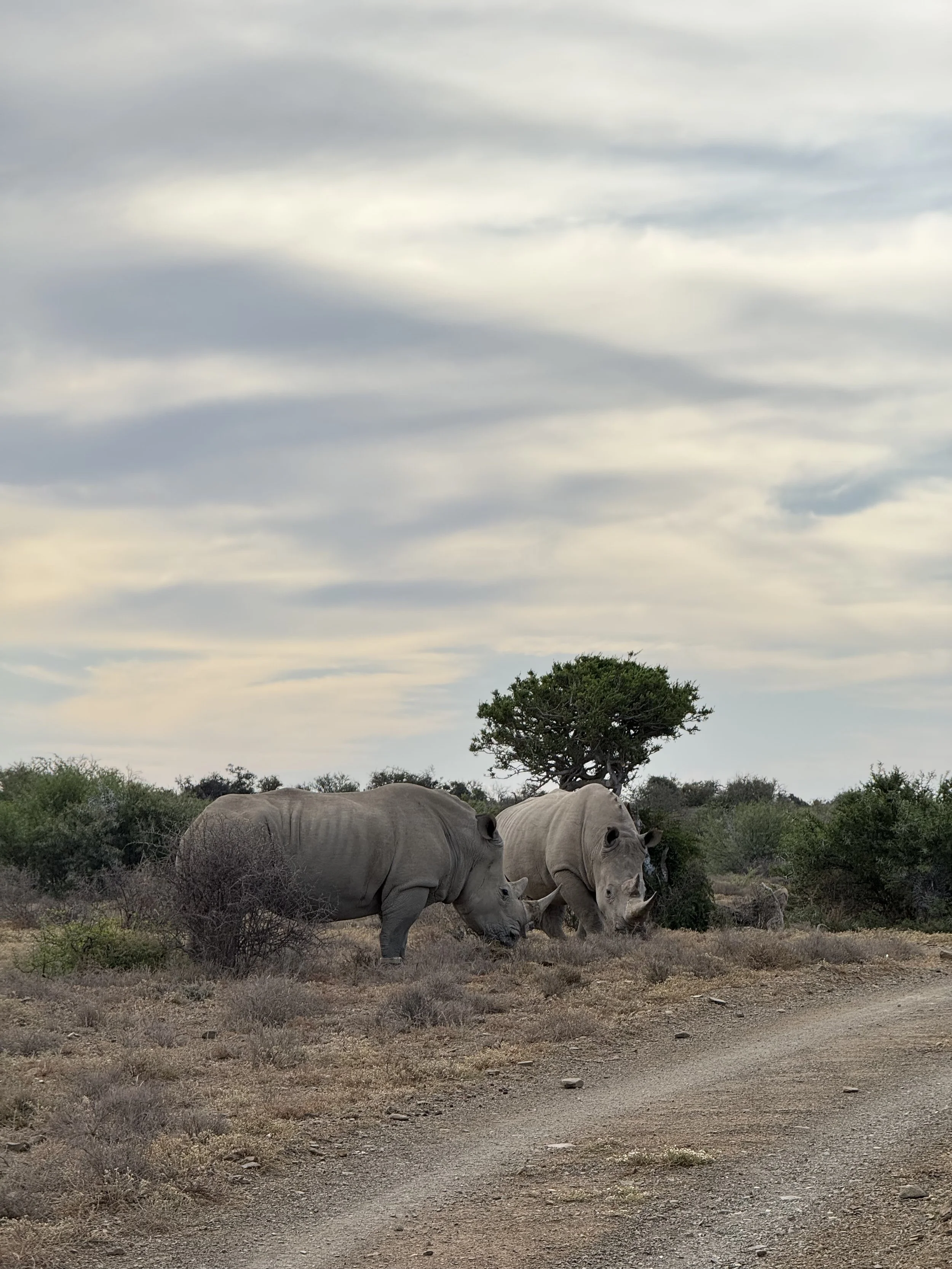
Conservation lies at the heart of our foundation, and we are dedicated to restoring and conserving the natural environment of the Kuzuko Private Game Reserve. The foundation manages the 14,500 hectares of spectacular Karoo landscape, and the many animals and wildlife that now once again call it home.
Since its establishment, Kuzuko has allowed its land to return to nature, resulting in the reintroduction of many species that had been absent for over 150 years, along with many more which have independently returned as nature has been given the space to thrive.
Our conservation project forms an integral part of the broader Addo Conservation Area, and significantly contributes towards a broader landscape level vision for a vast interconnected conservation area in the Eastern Cape.
Conservation
in action

Our conservation projects:
-
Prior to its establishment, Kuzuko Private Game Reserve was once
22 separate farms, many of which were in a heavily degraded condition following decades of overgrazing.One of our largest conservation projects - and the largest ever spekboom reforestation project, was recently completed at Kuzuko, with over 26 million cuttings planted over 12,000 acres of the reserve. The project employed 200 planters and took 2 years to complete.
As they grow, spekboom trees help retain moisture, develop topsoil, and regulate temperature - all of which creates conditions for other native plants and fauna to return. Besides this, per hectare, they absorb more carbon dioxide than the Amazon. Alone, the reserve’s spekboom will capture an estimated 1.5 million tonnes of carbon a year.
Spekboom is also a favourite food of the reserve’s resident animals, particularly our elephants! It is hardy and nutritious, and native to South Africa.
-
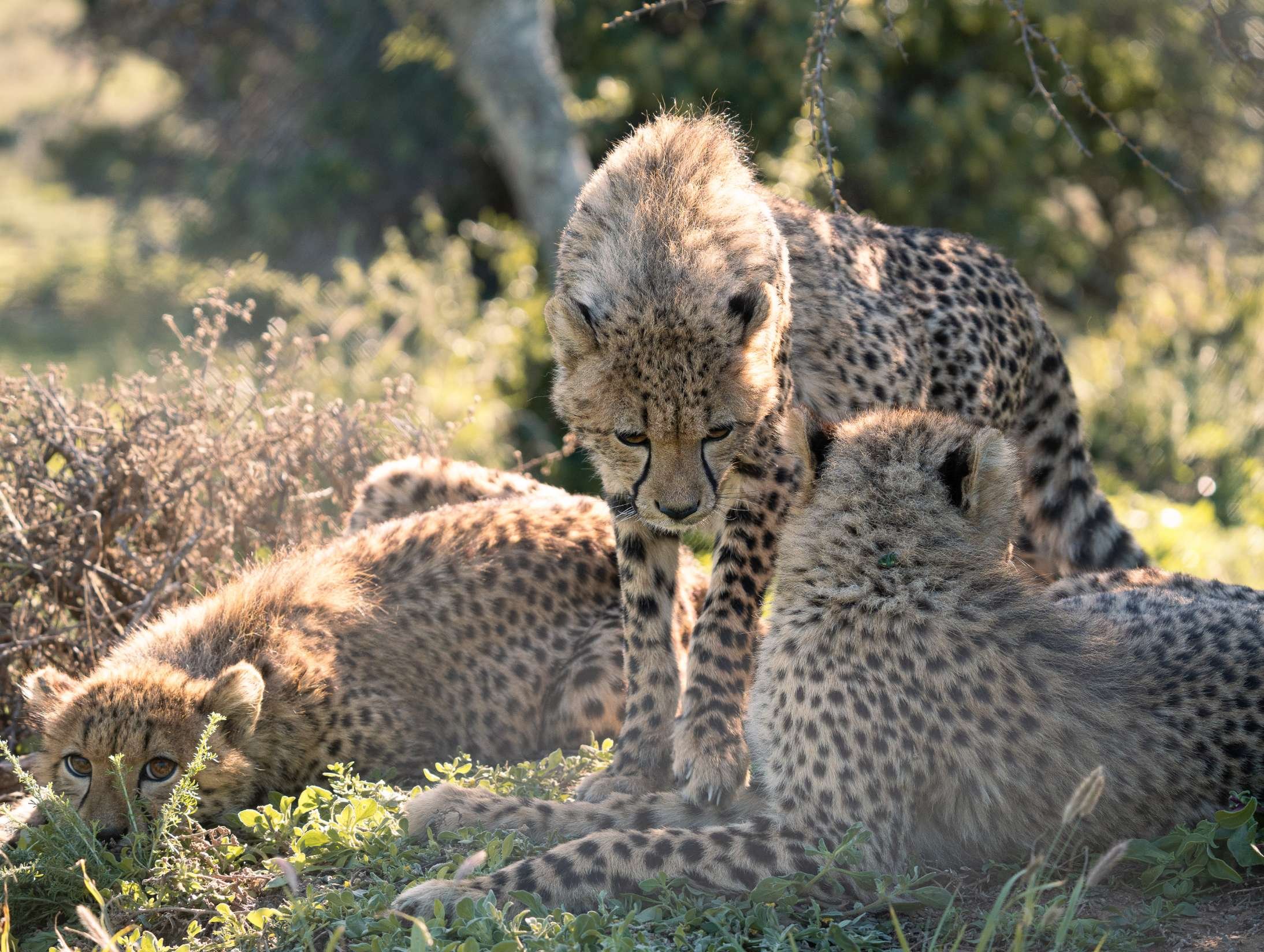
Our foundation supports the rewilding and breeding of endangered cheetah to contribute to the wider metapopulation.
To date, we have rewilded 18 cheetahs. This process includes a managed release whereby cheetahs are initially placed in a safe enclosure (called a boma) and are released gradually as they get used to their new environment.
Most recently, this included the rewilding and relocating of an orphaned family of four cheetah brothers, after their mother had been killed while hunting. We also welcomed a new female cheetah, Zola, to the reserve in 2025.
What is a metapopulation and why are we working to manage it?
A metapopulation refers to a network of distinct, geographically separated populations of the same species, managed as one unified population. In the case of cheetahs, population fragmentation has resulted from habitat loss, human population growth (leading to increased conflict between humans and wildlife), and land privatization. To combat the risks of inbreeding, we are working to translocate some cheetahs between these fragmented populations.
While this may seem like a considerable effort, this managed cheetah population is currently the only growing wild cheetah population worldwide. Its success allows us to support and supplement other cheetah populations across Africa, and reintroduce the species to areas where they have previously become extinct.
-
Soil erosion is regarded as one of South Africa's most significant environmental problems, and although it is a natural process, it has often been exacerbated by human activities (particularly intensive agricultural practices that lack conservation techniques, such as inappropriate cultivation and overgrazing, which had been occurring for decades on the farms from which Kuzuko was established).
Managing erosion is therefore an important part of our mission to restore the reserve’s land to its former glory, and ensuring it can sustain itself for years to come.
A few of the ways in which we have been managing erosion is through rock barriers (active erosion control), water channels, and strategic planting - particularly spekboom). One of its many benefits, spekboom's indigenous root systems can hold onto soil, even in poor or rocky conditions, which helps prevent the nutritious topsoil from being washed away.
In regard to combating invasive species, the reserve has undertaken both physical clearing and biocontrol - an environmentally friendly method of plant control that uses natural organisms to reduce or control specific fauna.
-
Cape mountain zebras once roamed over most of the Eastern Cape's mountainous areas, but illegal hunting, competition for natural grazing with livestock, and habitat destruction saw their numbers plummet to near extinction. Following conservation efforts, they are now considered vulnerable.
Because of this, we are proud that our reserve is home to an important population of Cape mountain zebra. Here they are given the space and environment to graze and thrive, and they never fail to put a smile on our faces.
Cheetah Rewilding - The story of Aero & Storm
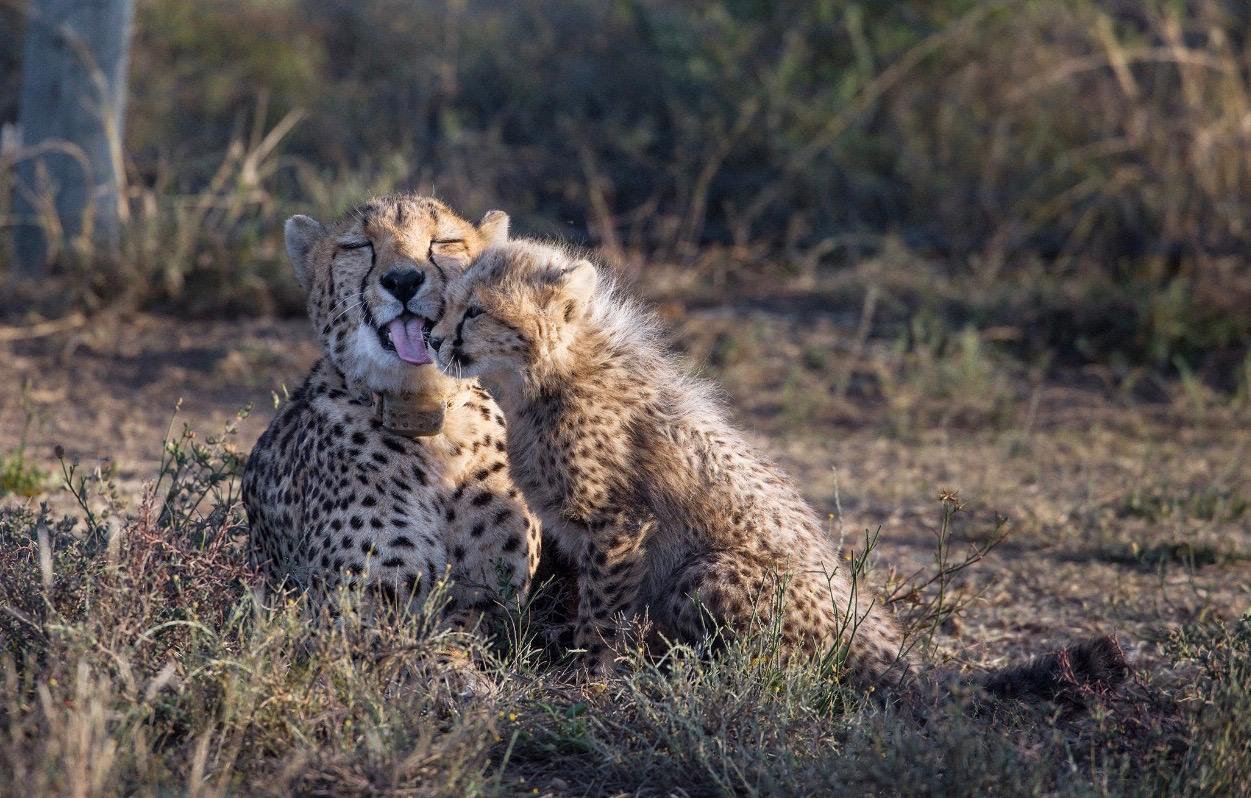
Aero, a pregnant, captive-raised female cheetah, was brought to Kuzuko to be rewilded along with her cubs. Following their birth however, it quickly became evident that she lacked the critical nutrients essential for nursing. Her male cub, Storm, in particular, soon lost the ability to walk.
Despite the usual cheetah behaviour of abandoning unwell cubs, Aero continued to care for Storm, with an instinct that he could pull through. Intervention, however, was necessary to provide the young cub with the proper nutrients and medical support.
Overtime, our ranger dedicatedly built trust with Aero, and she was able to give the cubs additional natural food and supplements. Gradually, Storm miraculously regained mobility.
Once all three cubs were strong enough, the family were released into a larger area of the reserve to begin hunting. Aero adapted to the wild well, successfully providing for her cubs who learnt critical survival skills.
What happened next?
Storm fully recovered and was eventually relocated to another reserve. Here he has continued to thrive and is now even a father himself. Crucially, his story has led to revised feeding protocols for captive cheetahs, and highlighted how important conservation is for the continued understanding and regrowth of the species.

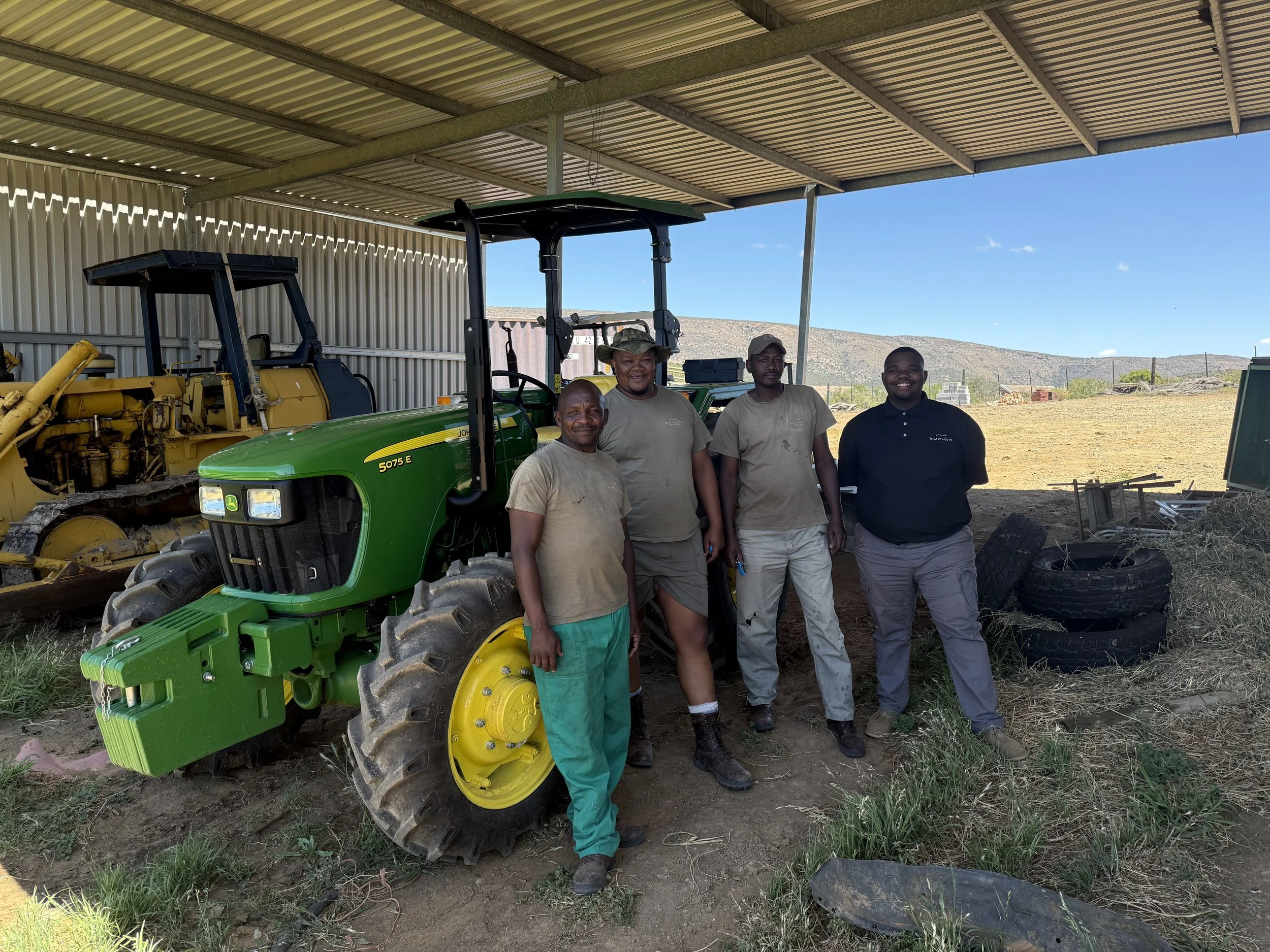
The Kuzuko Foundation is proud to employ a reserve team dedicated to restoring the environment and looking after the wildlife that call it home. The team are out 365 days a year, and we are particularly proud that all are from the local communities surrounding the reserve.
Our reserve team:
How to
support us
Stay at Kuzuko Lodge
Your stay at Kuzuko Lodge directly contributes to creating jobs and supporting the work of the Kuzuko Foundation. Visit and see our work for yourselves. Visit the website here: Kuzuko Lodge
Donate
However big or small, we value and are grateful for every donation made to the foundation. If our vision resonates with you, and you would like to make a donation, please get in touch below.
Get in touch
foundation@kuzuko.com
Please send us an email if you would like to get in touch or make a donation. We would love to hear from you.