
Education &
Mentorship
Kuzuko Reserve is located in South Africa’s Eastern Cape - one of the country’s poorest regions. Many years ago, much of the Eastern Cape was productive farmland. Over time, however, shifting industries, poor land management and widespread overgrazing led to environmental degredation and economic decline. Today the region faces persistent challenges, including high unemployment, poverty, food insecurity, underdeveloped infastructure, environmental strain, and one of the lowest educational completion rates in the country. These intersecting issues create a cycle of limited opportunity, and many young people struggle to see a path forward.
At Kuzuko Foundation, we believe that education and mentorship are among the most powerful levels of change. By empowering young people, we help break the cycle of structural disadvantage and help build sustainable futures.
Our approach
Our approach to education focuses on two key areas:
Supporting young people stay in school
Many children in the direct area surrounding the Kuzuko game reserve attend small remote primary schools. However, transitioning to secondary schools in town can be a difficult prospect, economically, logistically, and socially. As a result, rural children often have narrower horizons and can feel pressure to start earning an income rather than pursue further education. Yet without completing school, their future opportunities are restricted.
To address this, Kuzuko Foundation provides:
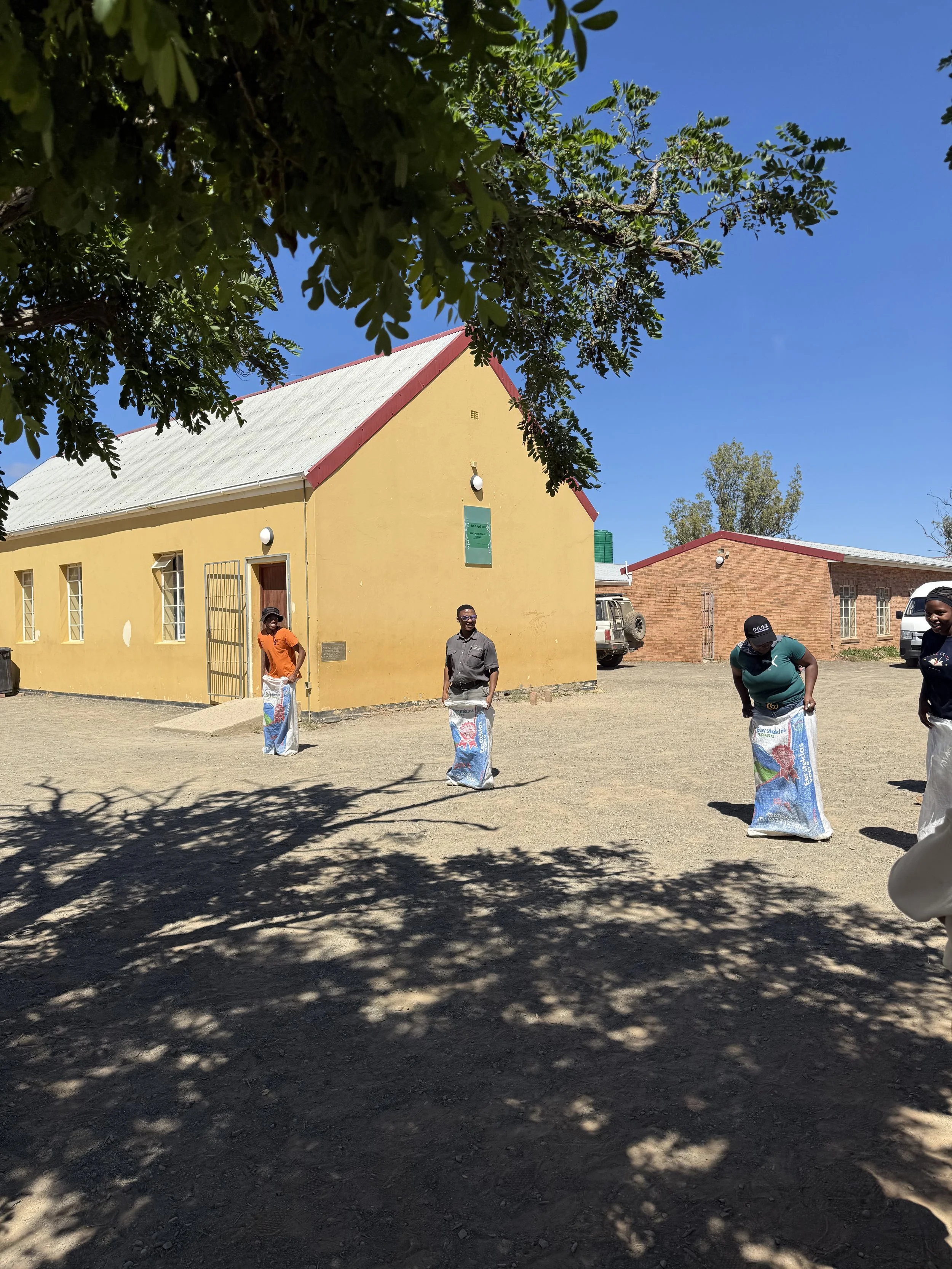
School sustainance - we provide practical support to Bracefield, a remote primary school, to enable them remain open when government supplies fall short.
Mentoring for school continuity - our social outreach office Freddie provides pasteral care and practical support to those facing the transition from primary to secondary school. Because town-based and rural learners often remain socially separated, we work to foster integration and encourage rural students to continue their education.
Environmental Education
For many young people in the region, environmental conservation is not part of everyday learning, and the incredible wildlife native to the area can feel distant (often separated from communities by private land). Our goal is to inspire a sense of connection and stewardship. We do this by:
Building environmental awareness
We teach young people about local ecosystems, the importance of biodiversity, and how communities can live in harmony with nature.
Hands-on experience
Whenever possible, we bring young people to our educational centre at Kuzuko (called Hopewell) where they can experience wildlife and conservation practices first-hand.
Career pathways
We highlight the many potential careers in conservation and environmental management, demonstrating how young people can both protect nature while building sustainable livelihoods.
Mentorship
The Pathfinders Programme
A lack of role models, limited guidance, and challenging home circumstances can often contrain the ambitions of young people in the Eastern Cape. Our Pathfinders Mentorship Programme addresses this by offering consistent, long-term support. In practice, our social outreach officer, Freddie, meets regularly with each mentee, offering guidance that is:
Holistic: Freddie addresses everything from financial literacy, confidence and lifestyle decisions to career planning and personal challenges.
Long-term: The mentorship does not have an end date.
Practical: Where possible, the foundation facilitates work experience and job shadowing at Kuzuko Game Reserve (where many former mentees now work). However, where direct opportunities here are not possible, Freddie still helps mentees map a clear route to their goals and supports them step by step. Sometimes this means helping them obtain a simple qualification - such as a driver’s licence - which can dramatically expand employment prospects.
At Kuzuko, we want to invest in the people of this region: nurture potential, broaden horizons, and build meaningful, long-term pathways to a more hopeful future.




How to
support us
Stay at Kuzuko Lodge
Your stay at Kuzuko Lodge directly contributes to creating jobs and supporting the work of the Kuzuko Foundation. Visit and see our work for yourselves. Visit the website here: Kuzuko Lodge
Donate
However big or small, we value and are grateful for every donation made to the foundation. If our vision resonates with you, and you would like to make a donation, please get in touch below.
Get in touch
foundation@kuzuko.com
Please send us an email if you would like to get in touch or make a donation. We would love to hear from you.